logo
Guangzhou Ruihe New Material Technology Co., Ltd
About Us
Your Professional & Reliable Partner.
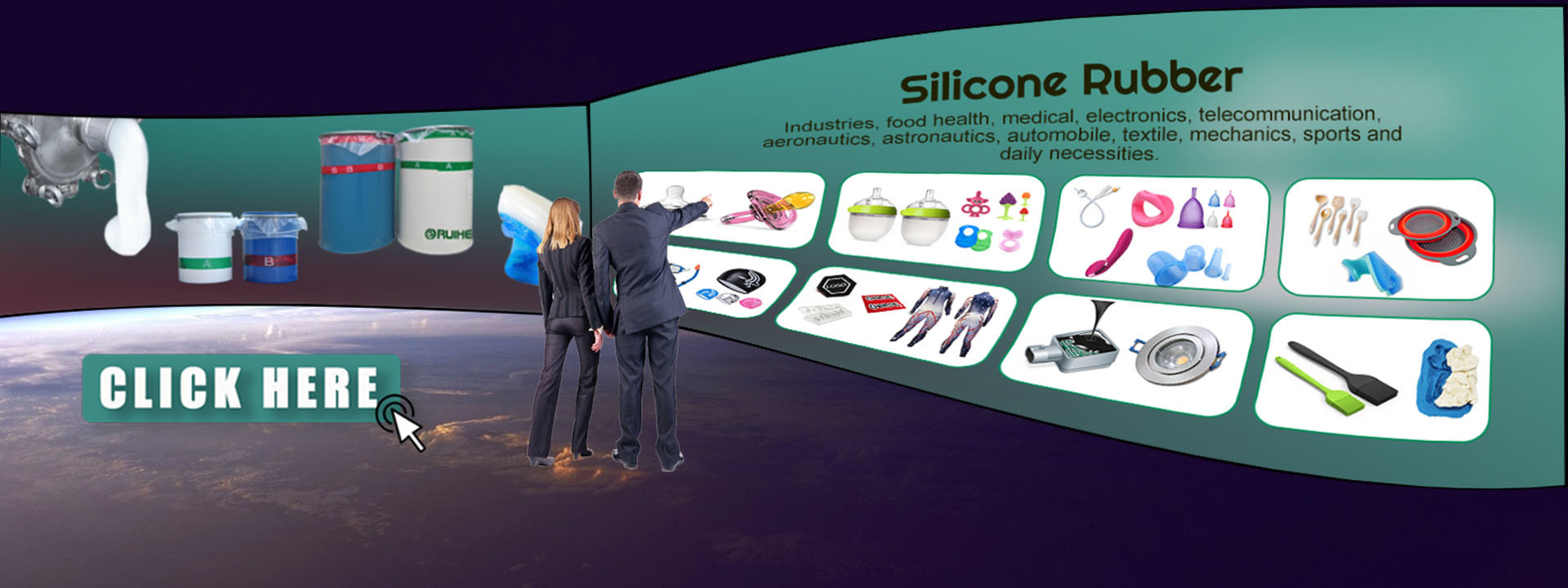
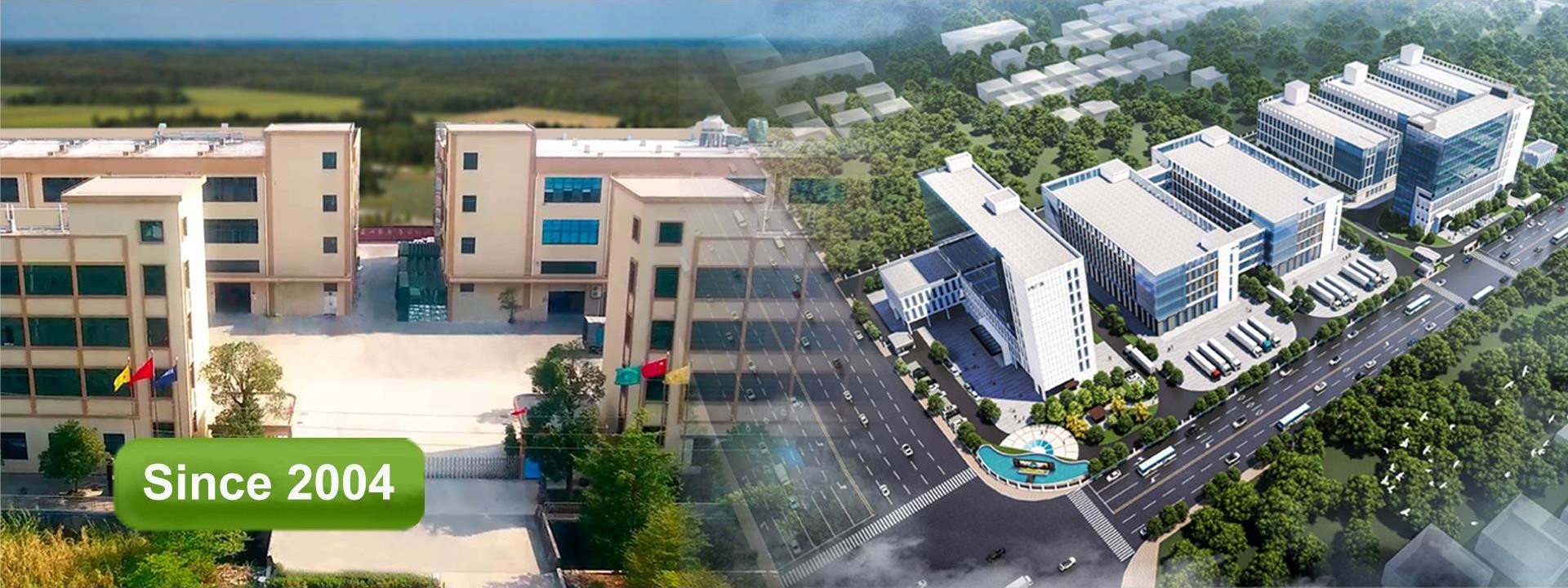
Guangzhou Ruihe New Material Technology Co., LtdEstablished in 2004, specializes in search, development, production, and distribution of environmentally-friendly silicone materials. Our headquarters is located in Huadu district, Guangzhou, China. Our products are widely used in all kinds of industries, such as medical, electronics, telecommunication, aeronautics, astronautics, automobile, textile, mechanics, sports and daily necessities. Through the 18 years, we are now recognized as the famous ...
Learn More

0

Year Established

0

Million+
Employees

0

Million+
Annual Sales
China Guangzhou Ruihe New Material Technology Co., Ltd HIGH QUALITY
Trust Seal, Credit Check, RoSH and Supplier Capability Assessment. company has strictly quality control system and professional test lab.
China Guangzhou Ruihe New Material Technology Co., Ltd DEVELOPMENT
Internal professional design team and advanced machinery workshop. We can cooperate to develop the products you need.
China Guangzhou Ruihe New Material Technology Co., Ltd MANUFACTURING
Advanced automatic machines, strictly process control system. We can manufacture all the Electrical terminals beyond your demand.
China Guangzhou Ruihe New Material Technology Co., Ltd 100% SERVICE
Bulk and customized small packaging, FOB, CIF, DDU and DDP. Let us help you find the best solution for all your concerns.

quality LSR Liquid Silicone Rubber & Food Grade Liquid Silicone Rubber manufacturer

Find Products That Better Meet Your Requirements.
Cases & News
The Latest Hot Spots.
Self-Lubricating LSR for Low-Friction Seals and Sliding Components: A Practical Upgrade for Injection Molding
Self-lubricating Liquid Silicone Rubber (LSR) is gaining attention as a practical material choice for manufacturers who want smoother assembly, quieter movement, and more consistent surface performance in molded silicone parts. Unlike conventional silicone rubber that may rely on external lubricants, self-lubricating LSR is designed to form a thin oil layer on the cured surface, creating a natural slip effect. This can reduce friction during installation and use, improve demolding, and help finished parts maintain stable performance over time.   At GUANGZHOU RUIHE NEW MATERIAL TECHNOLOGY CO.,LTD, our self-lubricating LSR grades are developed for injection molding, especially where friction, drag, or squeak impacts product quality. Typical applications include waterproof sealing parts (sealing rings, gaskets, caps, plugs, splash-proof seals) and furniture seals & sliding components (drawer rails, soft-close structures, edge protectors, anti-wear contact parts). In these products, low friction is not a “nice-to-have”—it directly supports faster assembly, smoother movement, and reduced wear marks.   Two commonly selected grades are 6250-30SL and 6250-40SL. Both are milky-white and feature self-lubricating surface behavior after curing. The oil content is adjustable, allowing manufacturers to tune slip levels based on part design and end-use needs. It is important to note that self-lubricating grades are not recommended for food-grade products, so selection should match the compliance requirements of your target market. Below is a quick comparison table that helps engineers and sourcing teams shortlist grades based on hardness, strength, and friction-related needs. Self-Lubricating LSR Data Table (Typical) Item 6250-30SL 6250-40SL Appearance Milky white Milky white Hardness (Shore A) 27–31 39–43 Density (g/cm³) 1.09–1.12 1.08–1.11 Rebound (%) ≥50 ≥50 Tear Strength (kN/m) ≥15.0 ≥25.0 Tensile Strength (MPa) ≥5.0 ≥7.0 Elongation (%) ≥500 ≥400 Oil Content (%) 6 6 A-side Viscosity (Pa·s) 1700 1500 B-side Viscosity (Pa·s) 1400 1300 Main Molding Method Injection molding Injection molding For industrial projects focused on sealing, sliding, and assembly efficiency, self-lubricating LSR can be a cost-effective way to improve performance without adding secondary lubrication steps. Contact Tel: 86 13421773611 Whatsapp/Wechat: 86 13421773611 Email: wendy@ruihesilica.com

2026

03/03

ISO 10993 Medical Grade Liquid Silicone Rubber (LSR) for Medical Components: Reduce Biocompatibility Risk & Improve Production Consistency
When you’re developing medical parts that may touch skin or be used in patient-care environments, one question comes up early and often: Is the silicone material suitable for ISO 10993 biocompatibility expectations? For many OEMs, this is not just a technical detail—it directly affects supplier approval, project timelines, and customer confidence. That’s why more teams start their material search with a clear keyword focus: ISO 10993 medical grade liquid silicone rubber (LSR).   GUANGZHOU RUIHE NEW MATERIAL TECHNOLOGY CO.,LTD supplies medical-grade LSR solutions designed for medical components where stable performance and reliable documentation matter. Instead of describing materials with vague phrases like “high quality” or “excellent performance,” we recommend selecting grades based on measurable parameters that engineers can use in drawings, IQC standards, and validation plans. This approach helps reduce repeated material checks, shortens internal decision cycles, and improves consistency when moving from samples to mass production.   What medical buyers and engineers care about (simple and practical)   Most medical projects don’t fail because a material is “not strong enough.” They fail because something becomes unpredictable during production or long-term use. In silicone selection, the most common concerns are:   Biocompatibility risk (ISO 10993): the material must fit biocompatibility requirements and support smooth approval communication.   Tearing during assembly: thin edges or small features can tear if tear strength is too low.   Sealing force loss over time: if the material takes a set (permanent deformation), seals may leak or fit changes.   Appearance change: transparent or light-colored parts can yellow or look aged after time.   Manufacturing stability: viscosity and hardness consistency affect molding repeatability and defect rate.   Key LSR Specification Snapshot (Typical Values / Ranges)   Below is a compact specification view you can reference when comparing grades. Exact values depend on the selected grade, but these ranges help teams shortlist quickly and communicate requirements clearly.   Parameter Typical Range / Value Why it matters Appearance Transparent / Translucent / Milky Choose based on cosmetic/visual needs Parameter Typical Range / Value Why it matters Appearance Transparent / Translucent / Milky Choose based on cosmetic/visual needs Hardness Shore A 10–71 From soft-touch to firm functional parts Viscosity 600–3000 Pa·s Influences filling, flow, and process stability Density 0.99–1.14 g/cm³ Helps keep part weight and consistency stable Tensile Strength 1.5–12 MPa Supports mechanical integrity in service Elongation at Break 100–850% Helps parts flex without cracking Tear Strength 5–40 kN/m Reduces tearing during demolding/assembly Tensile Set 0.8–≤3.2% Lower = better recovery for sealing performance Linear Shrinkage ≈2.1–2.7% Supports dimensional stability and fit control   If your team wants a quick selection method, try this 3-step filter:   Start with hardness (Shore A):   Softer grades are often used for comfort, soft-touch, or flexible sealing.   Higher hardness grades are used when the part needs more shape stability.   Decide what failure risk is most costly:   If you worry about tearing, prioritize higher tear strength and adequate elongation.   If you worry about leakage or fit change, focus on lower tensile set and stable shrinkage.   Confirm appearance requirement:   For clear parts, you’ll care more about long-term appearance stability and resistance to yellowing/aging.   This is a simple but effective way to avoid “trial-and-error selection,” reduce wasted sampling rounds, and align engineering + procurement on the same decision language.   Why ISO 10993 positioning matters for medical projects   Using the phrase ISO 10993 medical grade liquid silicone rubber (LSR) in your documentation is helpful because it matches how many customers, quality teams, and product managers communicate internally. It also makes your project’s material strategy easier to explain and defend—especially when multiple stakeholders are involved. When your material supplier can support selection with clear mechanical ranges and stable processing behavior, you reduce the chance of late-stage changes that can delay tooling decisions or validation schedules.   If you share your target hardness, part type (seal, cover, mask component, accessory), and whether the part needs to be transparent, we can recommend the most suitable medical-grade LSR options for evaluation.   Contact Tel: 86 13421773611 Whatsapp/Wechat: 86 13421773611 Email: wendy@ruihesilica.com

2026

02/04

Ruihe 6250 FV Series Non Post-Cured Liquid Silicone Rubber
Introduction Liquid Silicone Rubber (LSR) is widely applied in medical, electronics, consumer goods, and industrial manufacturing due to its excellent elasticity, heat resistance, and chemical stability. Traditionally, many LSR materials require post-curing after molding to reduce volatile residues and stabilize material performance. To meet increasing demands for cleaner processing and higher efficiency, Ruihe has developed the 6250 FV Series Non Post-Cured Liquid Silicone Rubber, designed to deliver stable performance without secondary heat treatment. What Is Ruihe 6250 FV Series Non Post-Cured LSR? The Ruihe 6250 FV Series is a specially formulated non post-cured liquid silicone rubber that completes sufficient crosslinking during the primary injection molding process. Molded parts can be used directly after demolding, eliminating the need for additional oven post-curing. Key formulation features include: Optimized platinum-catalyzed curing system Low-volatility, high-purity silicone raw materials Precise formulation and process control The series is designed with VOC content effectively controlled below 0.35, ensuring low odor and minimal volatile residues after molding. Key Advantages of 6250 FV Series High Production Efficiency By eliminating post-curing, the 6250 FV Series shortens production cycles, reduces energy consumption, and improves manufacturing efficiency—especially suitable for automated and high-volume production lines. Low VOC & Low Odor Performance With VOC levels controlled below 0.35, this series significantly reduces odor, fogging, and migration risks, making it ideal for enclosed components and applications with strict cleanliness requirements. Wide Hardness Range The 6250 FV Series is available in a hardness range from 20 to 70 Shore A, allowing flexibility for different product designs—from soft-touch components to structural silicone parts. Stable Mechanical & Thermal Properties Even without post-curing, the material maintains excellent elasticity, tear strength, hardness stability, and long-term heat aging resistance. Improved Product Consistency The elimination of secondary curing variables results in better dimensional stability and reduced batch-to-batch variation. Typical Applications The Ruihe 6250 FV Series non post-cured LSR is suitable for:   Medical and healthcare components Electronic and electrical insulation parts Consumer and baby products Industrial precision molded silicone components   Customization & Technical Support The 6250 FV Series can be customized in terms of hardness, flowability, curing speed, and color. Ruihe provides technical support from material selection through mass production to ensure stable and reliable performance in real processing conditions. Conclusion The Ruihe 6250 FV Series Non Post-Cured Liquid Silicone Rubber combines low VOC performance, a wide hardness range (20–70 Shore A), and high production efficiency. It offers manufacturers a practical solution to simplify processing while maintaining consistent quality and performance.   If need.please do not hesitate to contact Whatsapp/Wechat: 86 13421773611, Email: wendy@ruihesilica.com  

2026

01/29